Showing posts with label fast facts. Show all posts

Wednesday, January 8, 2020

Henry Wadsworth Longfellow Quick Facts

Henry Wadsworth Longfellow was an illustrious 19th century American novelist and poet.

Henry Wadsworth Longfellow Quick Facts

Profile

  • Birth Name: Henry Wadsworth Longfellow
  • AKA: Henry Longfellow
  • Date of Birth: February 27, 1807
  • Place of Birth: Portland, Maine, USA
  • Zodiac Sign: Pisces
  • Date of Death: March 24, 1882
  • Died at Age: 75 years
  • Place of Death: Cambridge, Massachusetts, USA
  • Place of Burial: Mount Auburn Cemetery in Cambridge, Massachusetts, USA
  • Cause of Death: Peritonitis
  • Ethnicity: White
  • Nationality: American
  • Father: Stephen Longfellow (1776–1849)
  • Mother: Zilpah (Wadsworth) Longfellow (1778–1851)
  • Siblings:
  1. Eldest Brother: Stephen Wadsworth Longfellow (1805–1850)
  2. Younger Sister: Elizabeth Wadsworth Longfellow (1808–1829)
  3. Younger Sister: Anne Wadsworth Pierce (1810–1901)
  4. Younger Sister: Alexander Wadsworth Longfellow (1814–1901)
  5. Younger Sister: Mary Greenleaf (Longfellow) (1816–1901)
  6. Younger Sister: Ellen Longfellow (1818–1834)
  7. Youngest Brother: Reverend Samuel Longfellow (1819–1892)
  • Spouses:
  1. Mary Storer Potter (b. 1812–d. 1835; m. 1831 until her demise)
  2. Frances Elizabeth Appleton (b. 1817–d. 1861; m. 1843 until her demise)
  • Children:
  1. Stillborn: - - - (October 5, 1835- October 5, 1835)
  2. Son: Charles Appleton Longfellow (1844–1893)
  3. Son: Ernest Wadsworth Longfellow (1845–1921)
  4. Daughter: Fanny Longfellow (1847–1848)
  5. Daughter: Alice Mary Longfellow (1850–1928)
  6. Daughter: Edith Dana Longfellow (1853–1915)
  7. Daughter: Anne Allegra Longfellow (1855–1934)
  • Alma Mater: Bowdoin College
  • Henry Wadsworth Longfellow is known for: composing melodious poems that frequently revolve around mythology and legend.
  • Henry Wadsworth Longfellow is criticized for: mimicking the English Romantic tradition.
  • Henry Wadsworth Longfellow was influenced by: Johann Wolfgang von Goethe (1749–1832), Johann Christoph Friedrich Schiller (1759–1805), Jean Paul Richter (1763-1825), Novalis (Georg Philipp Friedrich Freiherr von Hardenberg) (1772–1801), E.T.A. Hoffmann (1776 –1822), Johann Ludwig Uhland (1787-1862), Washington Irving (1783–1859), William Cullen Bryant (1794–1878), James Fenimore Cooper (1789–1851), Walt Whitman (1819–1892), and Emily Dickinson (1830 –1886).
  • Henry Wadsworth Longfellow’s works inspired: NA
  • Awards:
  1. Honorary doctorate of laws from Harvard in 1859.

Quotes

“The shades of night were falling fast,
As through an Alpine village passed
A youth, who bore, 'mid snow and ice,
A banner with the strange device,
Excelsior!”
Henry Wadsworth Longfellow, Excelsior (1842)

Major Works

  • Coplas de Don Jorge Manrique (1833)
  • Outre-Mer (1835)
  • Voices of the Night (1839)
  • Hyperion (1839)
  • Ballads and Other Poems (1842)
  • Poems on Slavery (1842)
  • The Spanish Student (1843)
  • Poets and Poetry of Europe (1844)
  • The Belfry of Bruges and Other Poems (1845)
  • Poems (1845)
  • The Waif (1846)
  • The Estray (1846)
  • Evangeline: A Tale of Acadie (1847)
  • The Seaside and the Fireside (1850)
  • Kavanagh (1851)
  • The Golden Legend (1851)
  • The Song of Hiawatha (1855)
  • Poems the "Blue and Gold" edition (1857)
  • The Courtship of Miles Standish and Other Poems (1858)
  • Tales of a Wayside Inn (1863)
  • Household Poems (1865)
  • Flower-de-Luce (1866)
  • Poetical Works (1866)
  • Dante's Divine Comedy (1867)
  • The New England Tragedies (1868)
  • The Divine Tragedy (1871)
  • Christus: A Mystery (1871)
  • Three Books of Song (1872)
  • Aftermath (1873)
  • The Complete Poetical Works of Henry Wadsworth Longfellow (1873)
  • Poetical Works, the "Household" edition (1874)
  • The Masque of Pandora and Other Poems (1875)
  • Complete Poetical Works, the "Centennial" edition (1876)
  • Poems of Places (1877)
  • Keramos and Other Poems (1878)
  • Ultima Thule (1880)
  • In the Harbor (1882)

Works Did You Know?

  • Henry Wadsworth Longfellow was the second of eight children born to Stephen Longfellow and Zilpah (Wadsworth) Longfellow.
  • Longfellow's father was a lawyer and congressman.
  • Longfellow's first wife, Mary Storer Potter, was his childhood friend from Portland.
  • Both of his wives died tragically: his first wife died from a miscarriage in 1835, whereas his second wife died in a fire in 1861.
  • Longfellow enrolled at Bowdoin College in 1822 along with his eldest brother Stephen.
  • Nathaniel Hawthorne was his classmate and lifelong friend.
  • After its replacement in 1906, the West Boston Bridge was renamed as Longfellow Bridge.
  • In March, 15 2007, the United States Postal Service issued a 39-cent stamp to celebrate the 200th birth anniversary of Longfellow.
  • Towards the later years, Longfellow led a very silent and reclusive life.
  • He contributed towards the first American translation of Dante Alighieri's Divine Comedy.
  • Although Longfellow was the leading poet of his time, during the early half of the 20th century his importance diminished and he was considered as a minor poet.
  • He is the only American poet for whom a bust was placed in Poet's Corner of Westminster Abbey in London.
  • His first poem was published in the Portland Gazette on November 17, 1820.
  • Due to Longfellow’s immense popularity, his face was used by many companies to promote their products.
  • The Mexican-American War (1846-1848) occurred during his lifetime.
  • He was a professor at Harvard University from 1836 to 1854.
  • He was a poet of romantic tradition following many trends of the English Romantic movement.

Media Gallery?

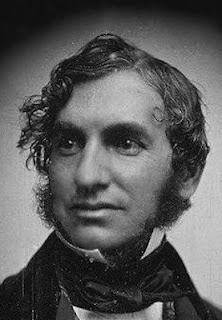
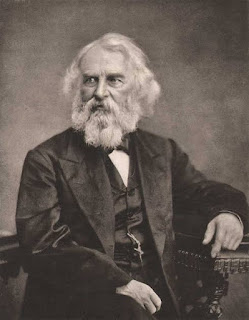
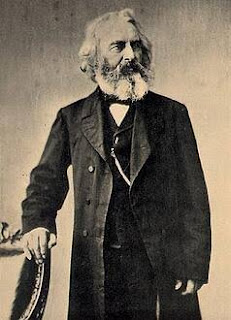
Henry Wadsworth Longfellow

Henry Wadsworth Longfellow

Henry Wadsworth Longfellow

Henry Wadsworth Longfellow

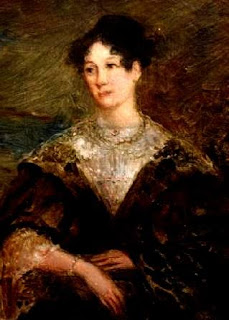
Mary Storer Potter

Frances Elizabeth Appleton

Monday, December 23, 2019

Wallace Stevens Quick Facts

Wallace Stevens was a major American poet of the 20th Century and an important member of the modernist movement in poetry.

Wallace Stevens Quick Facts

Profile

  • Birth Name: Wallace Stevens
  • Pseudonym: Peter Parasol
  • Date of Birth: October 2, 1879
  • Place of Birth: Reading, Pennsylvania, United States of America
  • Zodiac Sign: Libra
  • Date of Death: August 2, 1955
  • Height: 6 ft 2 in
  • Died at Age: 75
  • Place of Death: Hartford, Connecticut, United States of America
  • Place of Burial: Cedar Hill Cemetery, Hartford, Connecticut, United States of America
  • Cause of Death: Stomach Cancer
  • Ethnicity: White
  • Nationality: American
  • Father: Garrett Barcalow Stevens (1848-1911)
  • Mother: Margaretha Catharine Zeller (1850-1912)
  • Siblings:
  1. Eldest Brother: Garrett Barcalow Stevens (1877-1937)
  2. Younger Brother: John Bergen Stevens (1880-1940)
  3. Younger Sister: Elizabeth (Stevens) McFarland (1885-1943)
  4. Youngest Sister: Mary Catharine Stevens (1889-1919)
  • Spouse: Elsie Viola (Moll) Stevens (m. 1909–1955)(b. 1886–d. 1963)
  • Children:
  1. Daughter: Holly Bright Stevens (1924–1992)
  • Alma Mater: Harvard University, New York Law School
  • Wallace Stevens is known for: (a) contrasting the harshness of modern industrialized life with the magnificence of nature (b)employing  superior diction and dignified rhythms.
  • Wallace Stevens is criticized for: being too abstract and philosophical.
  • Wallace Stevens was influenced by: Charles Baudelaire, Stéphane Mallarmé, Jules Laforgue, and Walt Whitman.
  • Wallace Stevens’ works inspired: James Merrill, Donald Justice, John Ashbery, Mark Strand, and John Hollander.
  • Literary Movement: Modernism
  • Awards:
  1. Bollingen Prize for Poetry (1949)
  2. National Book Award for Poetry (1951, 1955)
  3. Frost Medal (1951)
  4. Pulitzer Prize for Poetry (1955)

Quotes

"Out of this same light, out of the central mind,
We make a dwelling in the evening air,
In which being there together is enough.”
- Steven WallaceFinal Soliloquy of the Interior Paramour

Major Works

Poetry
  • Harmonium (1923)
  • Ideas of Order (1936)
  • Owl's Clover (1936)
  • The Man with the Blue Guitar (1937)
  • Parts of a World (1942)
  • Transport to Summer (1947)
  • Auroras of Autumn (1950)
  • Collected Poems (1954)
  • Opus Posthumous (1957)
  • The Palm at the End of the Mind (1972)
  • Collected Poetry and Prose (1997)
Prose
  • The Necessary Angel (essays) (1951)
  • Letters of Wallace Stevens, edited by Holly Stevens (1966)

Did You Know?

  • Stevens was the second of five children born to Garrett Barcalow Stevens, a successful lawyer and Margaretha Catharine Zeller, a former school teacher.
  • It took him seven years to complete his first book of poetry, Harmonium which was published in 1923.
  • Although Harmonium is now considered as a seminal work in modern poetry, the volume of its sale was insignificant.
  • During his early twenties, he had a short love affair with Sybil Gage Weddle, a beautiful and intellectual young lady with pleasing personality. She is a woman who he memorized for the rest of the life.
  • He espoused Elsie Kachel, a beautiful, lower class, ill-educated, and intellectually apathetic woman against his family’s approval. None from his family attended the wedding.
  • After encountering opposition against his marriage, Stevens ceased speaking to his father for the rest of his life.
  • The marriage was unhappy as Elsie gradually created a gulf between herself and Stevens after the birth of Holly, their only daughter. The couple, however, never divorced.
  • Holly edited her father's letters which was published as Letters of Wallace Stevens in 1966.
  • His 1954 book, Collected Poems won both a National Book Award and the Pulitzer Prize.
  • Despite being a contemporary of modernist poets, such as T.S. Eliot, Ezra Pound, and William Carlos Williams, Wallace never joined the intellectual circle.
  • Stevens enrolled in Harvard as an undergraduate student in 1897 but left the university in 1900 without accomplishing a degree.
  • He graduated in law in 1903 from New York Law School and was admitted to the U.S. Bar in 1904.
  • He practiced law in different law firms until 1916.
  • In 1916, Stevens took a position at Hartford Accident and Indemnity Company.  In 1932 he was appointed Vice President of the company and served there until his demise.
  • Wallace Stevens won the Pulitzer Prize for Poetry in 1955, the year of his death.

Media Gallery

Wallace Stevens in 1916

Sybil Gage Weddle  in 1909

Elsie Stevens by the bridge in Elizabeth Park

Wallace Stevens with Holly in 1925

Elsie Stevens with Holly in 1924

Wallace Stevens

Monday, September 23, 2019

Benjamin Lee Whorf Quick Facts

Benjamin Lee Whorf was a notable American linguist.

Benjamin Lee Whorf Quick Facts

Profile

  • Birth Name: Benjamin Lee Whorf
  • AKA: Benjamin Whorf
  • Date of Birth: April 24, 1897
  • Place of Birth: Winthrop, Massachusetts, United States
  • Zodiac Sign: Taurus
  • Date of Death: July 26, 1941
  • Died at Age: 44
  • Place of Death: Hartford, Connecticut, United States
  • Place of Burial: Winthrop Cemetery, Winthrop, Suffolk County, Massachusetts, United States
  • Cause of Death: Cancer
  • Ethnicity: White
  • Nationality: American
  • Father: Harry Church Whorf (1874-1934)
  • Mother: Sarah Edna (née Lee) Whorf (1871-1962)
  • Siblings:
  1. Brother: John Calderwood Whorf (1903-1959), married Vivienne Isabelle Wing (1903-1972) in 1925.
  2. Brother: Richard Baker Whorf (1906-1966), married Margaret Harriet Smith (1908-1998) in 1929.
  • Spouse: Celia Inez Peckham (M. 1920) (b.1901-d.1997)
  • Children:
  1. Son- Raymond Ben Whorf (b.1922)
  2. Son- Robert Peckham Whorf (b.1924)
  3. Daughter- Celia Lee Whorf (b.1930)
  • Alma Mater: Massachusetts Institute of Technology
  • Benjamin Whorf is known for: Sapir–Whorf hypothesis, Nahuatl linguistics, allophone, cryptotype,  and Maya script
  • Benjamin Lee Whorfis criticized for: NA
  • Benjamin Lee Whorf was influenced by: Fabre d'Olivet, Edward Sapir, Albert Einstein, Bertrand Russell, C. K. Ogden, Madame Blavatsky
  • Benjamin Lee Whorf’s Works Inspired: George Lakoff, John A. Lucy, Michael Silverstein, Linguistic Anthropology, M.A.K. Halliday, Dell Hymes
  • Fields: Linguistics, Anthropology, Fire Prevention

Quotes

"Thinking is most mysterious, and by far the greatest light upon it that we have is thrown by the study of language. This study shows that the forms of a person's thoughts are controlled by inexorable laws of pattern of which he is unconscious. These patterns are the unperceived intricate systematizations of his own language—shown readily enough by a candid comparison and contrast with other languages, especially those of a different linguistic family. His thinking itself is in a language—in English, in Sanskrit, in Chinese. And every language is a vast pattern-system, different from others, in which are culturally ordained the forms and categories by which the personality not only communicates, but also analyzes nature, notices or neglects types of relationship and phenomena, channels his reasoning, and builds the house of his consciousness.”

Benjamin Lee Whorf, Language, Thought, and Reality: Selected Writings

Major Works

Language, Thought, and Reality: Selected Writings (1956)

Did You Know?

  • Benjamin Lee Whorf was the eldest of the three sons born to Harry Church Whorf and Sarah Lee Whorf.
  • His father had a predilection for different fields of works, who first worked as a commercial artist and then tended towards playwriting, acting, and theatrical production.
  • His younger brother John was an internationally renowned painter and illustrator.
  • Whorf’s youngest brother Richard Whorf was an American actor, author, director, and designer.
  • Most of his works were published posthumously.
  • Although Benjamin Whorf exerted a significant influence in linguistics, he had never pursued career in that field.
  • Whorf refused countless research positions and opted to hold on to his career in chemical engineering.
  • Since childhood Whorf was an avid reader and he used to read books written on almost any subject.
  • Despite he always enjoyed studying language, Whorf finally attained a degree in chemical engineering from the Massachusetts Institute of Technology in 1918.
  • In the year 1919, he secured the position of an engineer at the Hartford Fire Insurance Company, where he served until his demise in 1941.
  • During the 1920s his interest in linguistics was revived and he corresponded with many renowned scholars of the time to share his ideas.
  • In 1931, Whorf enrolled at the Yale University as a part-time, non-degree graduate student and studied under the influential American linguist and anthropologist Edward Sapir.
  • Later on, his study with Sapir paved the way for formulating the concept of the equation of culture and language which is known as Sapir–Whorf Hypothesis.
  • In 1937, Whorf started his career as lecturer in Anthropology at University of Yale; however, he left Yale just after a year owing to severe health issues.
  • After ending his teaching career at Yale, he continued writing and researching until the last day of his life.

Wednesday, August 28, 2019

Dell Hymes Quick Facts


Dell Hymes, an influential sociolinguist, anthropologist, and folklorist.

Dell Hymes Quick Facts

Profile

  • Birth Name: Dell Hathaway Hymes
  • AKA: Dell Hymes; Dell H. Hymes
  • Date of Birth: June 7, 1927
  • Place of Birth: Portland, Oregon, USA
  • Zodiac Sign: Gemini
  • Date of Death: November 13, 2009
  • Died at Age: 82
  • Place of Death: Charlottesville, Virginia, USA
  • Place of Burial: NA
  • Cause of Death: Kidney failure & Alzheimer’s disease
  • Ethnicity: White
  • Nationality: American
  • Father: Howard Hathaway
  • Mother: Dorothy (née Bowman) Hymes
  • Siblings:
  1. Brother: Corwin Hymes
  • Spouse:
  1. Virginia (née Dosch) Wolff (m. 1954)
  • Children:
  1. Daughter- Vicky (Wolff) Unruh (by Virginia’s first marriage) (spouse: David)
  2. Son - Robert Paul Wolff Hymes (by Virginia’s first marriage) (spouse: Debora Worth)
  3. Daughter- Alison Bowman Hymes
  4. Son- Kenneth Dell Hymes (spouse: Leisl Patton Hymes)
  • Alma Mater: Reed College; Indiana University.
  • Dell Hymes is known for: pioneering the connection between speech and human relations and human understandings of the world.
  • Dell Hymes is criticized for: NA
  • Dell Hymes was influenced by: Franz Boas, Edward Sapir, Harry Hoijer, Roman Jakobson, Erving Goffman, Ray L. Birdwhistell, and Harold Garfinkel, Harvey Sacks, Emanuel Schegloff, and Gail Jefferson.
  • Dell Hymes’s Works Inspired: Richard Bauman, Henry Glassie, and Lee Haring.
  • Research Interests: Anthropology, Native American mythology, ethnopoetics.

Career History

  • Hymes' first faculty position was at the Harvard University where he remained five years.
  • In 1960, he joined the faculty of the University of California, Berkeley and served there for five years.
  • Dr. Hymes joined the University of Pennsylvania faculty in 1965 as professor of folklore and linguistics and of anthropology.
  • From 1975 to 1987, he served as the dean of the University of Pennsylvania Graduate School of Education.
  • He left Pennsylvania in 1987 to serve on the faculty at the University of Virginia in both the anthropology and English departments. He retired from Pennsylvania in 1998 as an emeritus professor.

Quotes

"We have then to account for the fact that a normal child acquires knowledge of sentences not only as grammatical, but also as appropriate. He or she acquires competence as to when to speak, when not, and as to what to talk about with whom, when, where, in what manner. In short, a child becomes able to accomplish a repertoire of speech acts, to take part in speech events, and to evaluate their accomplishment by others. This competence, moreover, is integral with attitudes, values, and motivations concerning language, its features and uses, and integral with competence for, and attitudes toward, the interrelation of language with the other code of communicative conduct."- Dell Hymes, “On communicative competence”
“The specification of ability for use as part of competence allows for the role of non cognitive factors, such as motivation, as partly determining competence. In speaking of competence, it is especially important not to separate cognitive from affective and volitive factors, so far as the impact of the theory on educational practice is concerned; but also with regard to speech design and explanation” - Dell Hymes, “On communicative competence”
"The concept of performance will take on great importance, in so far as the study of communicative competence is seen as an aspect of what from another angle may be called the ethnography of symbolic forms, the study of the variety of genres, narration, dance, drama, song, instrumental music, visual art, that interrelate with speech in the communicative life of a society and in terms of which the relative importance and meaning of speech and language must be assessed - Dell Hymes, “On communicative competence”

Major Works

Language in Culture and Society: A Reader in Linguistics and Anthropology (1964)
"In Vain I Tried to Tell You": Essays in Native American Ethnopoetics (1981)
Reinventing anthropology (1972)
Ethnography, Linguistics, Narrative Inequality: Toward an Understanding of Voice (1996)
Now I Know Only So Far (2003)
American Structuralism (1975)
Breakthrough Into Performance (1973)
Essays in the History of Linguistic Anthropology (1983)
Language in Education: Ethnolinguistic Essays (1980)
The use of computers in anthropology (1965)
On Noam Chomsky: Critical Essays (1974)
Foundations in Sociolinguistics: An Ethnographic Approach (1974)

Did You Know?

  • Between 1944 to 1945 Hymes attended public schools in Oregon.
  • After one year of his enrollment at Reed College, Hymes joined the army and served two years as clerk in South Korea during the World War II.
  • After the war he returned to Reed in 1947 and studied under legendary anthropology professor David French and his wife Kay Story French.
  • In 1950, Hymes earned his bachelor’s degree in literature and anthropology from Reed College.
  • He earned his Ph.D. in linguistics from Indiana University in 1955.
  • He coined the term “Communicative competence” in reaction to Noam Chomsky’s (1965) concept of “linguistic competence”.
  • He postulated the SPEAKING Model.
  • He was one of the first to call the fourth subfield of anthropology "linguistic anthropology" instead of "anthropological linguistics".
  • He served as the president of the Linguistic Society of America in 1982, of the American Anthropological Association in 1983, and of the American Folklore Society.
  • In 1972, Hymes founded the journal Language in Society and served as its editor for 22 years.
  • In 2006, he was awarded the Gold Medal of Philology.
  • Hymes’ first marriage was a failure and ended in divorce.
  • He got married for the second time in 1954 to Virginia Dosch Wolff.
  • Hymes and Virginia were married for 55 years until his death in 2009.
  • Hymes adopted Virginia’s two children by her first marriage.
  • His wife, Virginia Hymes, was also a sociolinguist and folklorist.
  • Like Hymes, Virginia went on to work for more than half a century on Native American cultures and languages.
  • It is alleged that during his tenure at the University of Pennsylvania he was involved in sexually harassing a number of women.
  • In 1981, Hymes published his seminal work, 'In Vain I Tried to Tell You': Essays in Native American Ethnopoetics.
  • Hymes is best known for his pioneering work in ethnopoetics.

Photographs

Dell Hymes

Dell Hymes with Virginia

Dell Hymes

Thursday, July 11, 2019

Michael Halliday Quick Facts

Michael Halliday is a British linguist and teacher.


Michael Halliday Quick Facts

Profile

  • Birth Name: Michael Alexander Kirkwood Halliday
  • AKA: M.A.K. Halliday
  • Date of Birth: 13 April 1925
  • Place of Birth: Leeds, Yorkshire, England
  • Zodiac Sign: Aries
  • Date of Death: 15 April 2018
  • Died at Age: 93
  • Place of Death: Sydney, Australia
  • Place of Burial: NA
  • Cause of Death: Natural causes
  • Ethnicity: White
  • Nationality: British
  • Father: Wilfred Halliday
  • Mother: Winifred Halliday  née Kirkwood
  • Spouse(s):
  1. Trenchu Wong (m. 1947)
  2. Irene (‘Pat’) Woolf (m. 1952)
  3. Anne McLaren
  4. Brenda Stephen (m. 1961)
  5. Ruqaiya Hasan (1931–2015) (m. 1967)
  • Children:
  1. By Woolf: Son- Andrew Daughter- Polly
  2. By Ruqaiya Hasan: Son - Neil
  3. By Anne McLaren: Daughter- Caroline
  4. By Brenda Stephen: Daughter- Clare
  • Alma Mater: University of London; Peking University; University of Cambridge.
  • Michael Halliday is Known for: developing Systemic Functional Linguistics
  • Michael Halliday is criticized for: NA
  • Michael Halliday was influenced by: Vilém Mathesius (Prague school) Wang Li, J.R. Firth, Benjamin Lee Whorf
  • Michael Halliday’s Works Inspired: Ruqaiya Hasan, C.M.I.M. Matthiessen, J.R. Martin, Norman Fairclough

Career History

  • 1954–1958: Assistant Lecturer in Chinese, Cambridge University
  • 1958–1963:Lecturer in General Linguistics and Reader, University of Edinburgh
  • 1963–1970: Director of Communication Research Center, University College, London
  • 1964: Linguistic Society of America Professor, Indiana University
  • 1965–971: Professor of Linguistics, UCL
  • 1972–1973: Fellow, Center for Advanced Study in the Behavioral Sciences, Stanford University
  • 1973–1974: Professor of Linguistics, University of Illinois
  • 1974-1975: Professor of Language and Linguistics, Essex University
  • 1976–1987: Foundation Professor of Linguistics, University of Sydney
  • 1988: Emeritus Professor of University of Sydney

Membership

  • Philological Society (United Kingdom)
  • Linguistic Association of Canada and the United States
  • Linguistic Society of America
  • Australian Linguistics Society.
  • Applied Linguistics Association of Australia

Quotes

“It is part of the task of linguistics to describe texts, and all texts, including those prose or verse, which fall within any definition of literature and are accessible to analysis by the existing methods of linguistics.” - Michael Halliday, The Linguistic Sciences and Language Teaching

Major Works

The linguistic sciences and language teaching (1964)
Intonation and Grammar in British English (1967)
A course in spoken English (1970)
Explorations in the functions of language (1973)
Language and Social Man (1974)
Learning how to Mean: Explorations in the Development of Language (1975)
Halliday: System and Function in Language: Selected Papers (1976)
Cohesion in English (1976)
Language as a Social Semiotic (1978)
Lexical Cohesion (1979)
Readings in Systemic Linguistics (1981)
Learning Asian Languages (1986)
An Introduction to Functional Grammar (1985)
Spoken and Written Language (1985)
New Developme5nts in Systemic Linguistics: Theory and application (1988)
Language, Context, and Text: Aspects of Language in a Social-semiotic Perspective (1985)
Writing science (1993)
Discourse in Society: Systemic Functional Perspectives (1995)
Construing Experience through Meaning (1999)
On language and linguistics (2003)
The Language of Early Childhood (2002)
On grammar (2002)
The Language of Science (2000)
Linguistic Studies of Text and Discourse (2002)
Computational and Quantitative Studies (2004)
Lexicology and Corpus Linguistics (2004)
Studies in Chinese Language (2005)
Language and Society (2007)
Language and Education (2007) 
Lexicology: A Short Introduction (2007)
Intonation in the Grammar of English (2008)
The Essential Halliday (2009)
Halliday in the 21st Century (2013)
Aspects of Language and Learning (2016)
Text Linguistics: The how and why of Meaning (2014)
An Introduction to Relational Network Theory: History, Principles, and Descriptive Applications (2017)
Verbal Art and Verbal Science: The Chess Moves of Language (2018)

Did You Know?

  • Michael Halliday’s father, Wilfred Halliday, was a dialectologist, an English teacher and a poet of the Yorkshire dialect, having deep predilection for grammar and Elizabethan drama.
  • His mother, Winifred Kirkwood, was a French teacher; during the First World War she held the position of Editor of The Gryphon, the official newspaper of the University of Leeds.
  • Halliday attained a B.A. in Chinese language and literature from the University of London.
  • He completed postgraduate work in linguistics, first at Peking University and later at the University of Cambridge.
  • Michael Halliday obtained his Ph.D. in 1955 from Peking University.
  • Halliday has honorary doctorates from University of Birmingham (1987), York University (1988), the University of Athens (1995), Macquarie University (1996), Lingnan University (1999) and Beijing Normal University (2011).
  • Michael Halliday founded the Department of Linguistics at the University of Sydney in 1976.
  • While serving at the University of Sydney, Halliday founded the Sydney School.
  • After his retirement from the University of Sydney in 1987 he became the Emeritus Professor in the same university.
  • The Department of Linguistics of the University of Sydney honoured Halliday with the founding of the Halliday Medal upon his retirement; in 2014, Halliday presented the award personally at the School of Literature, Art and Media’s prize-giving ceremony.
  • Halliday’s works particularly concerned with applying the understanding of the basic principles of language to the theory and practices of education.
  • Halliday married several times in his life.
  • Halliday has four grandchildren: Bianca, Nicole, Rhona and Cameron.
  • After the demise of his beloved wife, Ruqaiya Hasan in 2015, he suffered terribly from the loss.
  • He died at Uniting Wesley Heights Nursing Home in Manly, New South Wales, Australia.

Tuesday, July 9, 2019

Richard Hudson Quick Facts

Richard Hudson is a British linguist and a retired professor.

Richard Hudson Quick Facts

Profile

  • Birth Name: Richard Anthony Hudson
  • AKA: Richard Anthony "Dick" Hudson; Richard (Dick) Hudson;  Dick Hudson; Richard Hudson
  • Date of Birth: September, 18 1939
  • Place of Birth: Sussex, England, United Kingdom
  • Zodiac Sign: Virgo
  • Ethnicity: White
  • Nationality: British
  • Father: John Pilkington Hudson (1910 – 2007)
  • Mother: Gretta Hudson née Heath (1910-1989)
  • Siblings: 2
  1. Brother-John Colin Hudson (1938 – 2004)
  2. Brother- George Bryan Stephens Heath
  • Spouse: Gaynor Evans
  • Children: 2
  1. Daughter - Lucy
  2. Daughter-  Alice
  • Alma Mater: Loughborough Grammar School, Leicestershire; Corpus Christi College; Cambridge, School of Oriental and African Studies
  • Richard Hudson is known for: his theory of Word Grammar.

Quotes

“Sociolinguists don’t set out to produce Grand Theories, so there are no schools of sociolinguistics. They’re also very self-critical on matters of method and data, and are forever wishing that their sociology was better. There are theories, but most sociolinguists are rather down-to-earth people with rather practical concerns and not much time for theory. At this stage in its development the subject probably has the right priorities—mainly collecting and cataloguing fairly low-level data.” - Richard Hudson, Interview with Richard Hudson by Joseph Hilferty

Major Works

English Complex Sentences: An Introduction to Systematic Grammar (1971)
Arguments for a Non-Transformational Grammar (1976)
Sociolinguistics (1980)
Word Grammar (1984a)
Introduction to Linguistics (1984b)
English Word Grammar (1990)
Teaching Grammar: A Guide for the National Curriculum (1992)
Word Meaning (1995)
English Grammar (1998)
Language Networks: The New Word Grammar (2007)
An Introduction to Word Grammar (2010)
Oxford Teaching Guides: How to Teach Grammar (2019)

Did You Know?

  • Richard Hudson is the second child born to John Pilkington Hudson and Mary Gretta Hudson.
  • His father was a horticulturalist and bomb-disposal officer.
  • Apart from staying in New Zealand from 1945 to 1948, he has lived in England for most of his life.
  • At present Hudson resides in North London.
  • He joined University College London in 1970 and spent the whole of his working life there as Lecturer, Reader then Professor of Linguistics.
  • Although retired in 2004, at present he holds the position of an Emeritus Professor of Linguistics at University College London.
  • He is a Fellow of the British Academy.
  • Hudson did his doctoral thesis on the grammar of Beja, a Semitic language spoken in north-eastern Africa.
  • His 1980 publication, Sociolinguistics is considered as a classic book in the field of Sociolinguistics.
  • Professor Hudson has done wide-ranging work in the area of syntax.

Thursday, July 4, 2019

Ronald Wardhaugh Quick Facts

Ronald Wardhaugh is a Canadian retired professor of linguistics.

Ronald Wardhaugh Quick Facts


Profile

Full Name: Ronald Wardhaugh
Date of Birth: 1932
Place of Birth: Canada
Nationality: Canadian
Ethnicity: White
Known for: his book An Introduction to Sociolinguistics

Major Works

  • English for a Changing World Level 1 (1984)
  • How Conversation Works (1985)
  • An Introduction to Sociolinguistics (1986)
  • Reading: A Linguistic Perspective (1969)
  • Introduction to Linguistics (1971)
  • The Contexts of Language (1976)
  • Investigating Language (1993)
  • Language and Nationhood  (1983)
  • Languages in Competition: Dominance, Diversity, and Decline (1987)
  • Understanding English Grammar (1995)
  • Proper English: Myths and Misunderstandings about Language (1999)

Quotes

“When two or more people communicate with each other in speech, we can call the system of communication that they employ a code. In most cases that code will be something we may also want to call a language.”

― Ronald Wardhaugh, An Introduction to Sociolinguistics
“… sociolinguistics is concerned with investigating the relationships between language and society with the goal being a better understanding of the structure of language and of how languages function in communication; the equivalent goal in the sociology of language is trying to discover how social structure can be better understood through the study of language, e.g., how certain linguistic features serve to characterize particular social arrangements.”
― Ronald Wardhaugh, An Introduction to Sociolinguistics

“While people do usually know what language they speak, they may not always lay claim to be fully qualified speakers of that language. They may experience difficulty in deciding whether what they speak should be called a language proper or merely a dialect of some language.”
― Ronald Wardhaugh, An Introduction to Sociolinguistics
“Taboo is the prohibition or avoidance in any society of behavior believed to be harmful to its members in that it would cause them anxiety, embarrassment, or shame. It is an extremely strong politeness constraint. Consequently, so far as language is concerned, certain things are not to be said or certain objects can be referred to only in certain circumstances, for example, only by certain people, or through deliberate circumlocutions, i.e., euphemistically. Of course, there are always those who are prepared to break the taboos in an attempt to show their own freedom from such social constraints or to expose the taboos as irrational and unjustified, as in certain movements for ‘free speech.’”

― Ronald Wardhaugh, An Introduction to Sociolinguistics

Did you know?

  • Ronald Wardhaugh held the position of professor from 1975 to 1995 in the Department of Linguistics, University of Toronto.
  • Wardhaugh served in various capacities, such as Assistant Professor (1966 to 1968), Associate Professor (1968 to 1972), and Professor of Linguistics (1972 to 1975) in the University of Michigan, Ann Arbor.
  • He held the position of Chairman in the Department of Linguistics, University of Toronto from 1975 to 1986.
  • In 1995 the University of Toronto conferred him the position of Emeritus Professor.
  • His book  An Introduction To Sociolinguistics (1986) has been widely deemed to be the most resourceful and comprehensive work on sociolinguistic literature.

Tuesday, February 12, 2019

Jim Cummins Quick Facts

Jim Cummins is a renowned SLA educator and one of the world’s most important theorists on bilingual education and second language acquisition. Cummins is also a prolific writer who authored and co-authored a number of notable books that reflect his theoretical perspective.

Jim Cummins Quick Facts

Profile

Name: Jim Cummins
Full Name: James Patrick Cummins
AKA: J. Cummins, James Cummins
Date of Birth: July 3, 1949
Birthplace: Dublin, Ireland
Zodiac Sign: Cancer
Nationality: Irish/Canadian
Ethnicity: Irish
Siblings: 2 brothers
Education: University of Alberta; The National University of Ireland
Cummins is known for: his concept of Basic Interpersonal Communication Skills (BICS), Cognitive Academic Language Proficiency (CALP), and Common Underlying Proficiency (CUP).
Cummins was influenced by: Tove Skutnabb-Kangas, Lily Wong Fillmore, Stephen Krashen, Merril Swain, Alma Flor Ada, and Denis Sayers.

Quotes

“When students' language, culture and experience are ignored or excluded in classroom interactions, students are immediately starting from a disadvantage. Everything they have learned about life and the world up to this point is being dismissed as irrelevant to school learning; there are few points of connection to curriculum materials or instruction and so students are expected to learn in an experiential vacuum. Students' silence and nonparticipation under these conditions have frequently been interpreted as lack of academic ability or effort, and teachers’ interactions with students have reflected a pattern of low expectations which become self-fulfilling.”

-Jim Cummins, Negotiating Identities: Education for Empowerment in a Diverse Society

Major Works

2007: Literacy, technology, and diversity: Teaching for success in changing times.
2005: Heritage languages.
2003: Lenguaje, poder y pedagogia. Ninos y ninas bilingues entre dos fuegos.
2001: Negotiating identities: Education for empowerment in a diverse society.
2000: Language, power, and pedagogy: Bilingual children in the crossfire.
1999: Taftotites ypo Diapragmatefsi.
1996: Negotiating identities: Education for empowerment in a diverse society.
1995/1997:  Brave new schools: Challenging cultural illiteracy through global learning networks.
1991: Language learning and bilingualism.
1990: Heritage languages: The development and denial of Canada's linguistic resources.
1989: Assessment and placement of minority students.
1989: Empowering minority students.
1986: Bilingualism in education: Aspects of theory, research and policy.
1984: Bilingualism and special education: Issues in assessment and pedagogy.
1983: Heritage language education: A literature review.
1981: Effects of French language experience at Kindergarten level on academic progress in French immersion programs.
1981: Bilingualism and minority language children.

Major Theories

  • Zone of Proximal Development (1994)
  • BICS (Basic Interpersonal Communicative Skills) (1981)
  • CALPS (Cognitive Academic Linguistics Proficiency Skills) (1981)
  • CUP (The Common Underlying Proficiency Model) (1981)
  • SUP (The Separate Underlying Proficiency Model) (1981)
  • Iceberg Theory (1981)
  • Due Icebergs Theory (1981)
  • Threshold Hypothesis (1981)
  • Length of Time Hypothesis (1981)
  • Blaming the Victim (1989)

Did you know?

  • Jim Cummins was born in Dublin to a middle class family with a respectable banking officer father.
  • Jim Cummins emigrated to Canada due to turbulent socio-political condition in the then colonized Ireland.
  • Jim Cummins earned his B.A. (honours) in Psychology with first class from the National University of Ireland In 1970.
  • Cummins attained his diploma in Applied Psychology from The National University of Ireland in 1971.
  • He earned his doctorate degree in Educational Psychology in 1974 from the University of Alberta.
  • During 1976 to 1978 period, he became involved with the Canadian “Parents for French” movement.
  • Cummins was awarded an honorary doctorate from the Bank Street College of Education in New York City In 1997.
  • He is currently a professor at the Ontario Institute for Studies in Education of the University of Toronto.
  • His research centers on the nature of language proficiency and second language acquisition.
  • The corpus of his publications is voluminous which includes books, journals, monographs, tests and curriculum programs, book chapters, book forwards, and book reviews. 

Media Gallery

Jim Cummins

Jim Cummins

Jim Cummins

Jim Cummins

Jim Cummins

Jim Cummins

Tuesday, November 27, 2018

Charles F. Hockett Quick Facts

Charles F. Hockett was an American linguist, anthropologist, and composer of the post-World War II era. Hockett was the last of the most influential advocates of the structural linguistics, which flourished particularly in the four decades from the 1930s to the 1960s.


Charles F. Hockett Quick Facts

Profile

  • Name: Charles F. Hockett
  • Birth Name: Charles Francis Hockett
  • AKA: Chas
  • Date of Birth: January 17, 1916
  • Place of Birth: Columbus, Ohio, United States
  • Date of Death: November 3, 2000
  • Place of Death: Cayuga Medical Center, Ithaca, NY, United States
  • Cause of Death: NA
  • Interred at: NA
  • Zodiac Sign: Capricorn
  • Nationality: American
  • Ethnicity: White
  • Religion: NA
  • Father: Homer Carey Hockett (1875-1960)
  • Mother: Amy Francisco (1875-1949)
  • Spouse: Shirley Orlinoff (b. 1920 d. 2013 m. 1942 to until his death)
  • Children:
  1. Daughter- Alpha Hockett Walker 
  2. Daughter-  Amy Robin Rose
  3. Daughter-  Rachel Hockett Youngman
  4. Daughter-  Carey Beth Hockett
  5. Son -   Asher Orlinoff Hockett
  • Grandchildren:
  1. Carly Walker
  2. Luke Walker
  3. Hannah Walker Edelman
  4. Charles Kee
  5. Annie Kee
  • Great-grandchildren:
  1. Chasden
  2. Sonja
  3. Elle
  4. Ivan
  5. Dage
  • Alma Mater: Ohio State University, Yale University
  • Charles F. Hockett is known for: his contributions to structural linguistics and linguistic anthropology
  • Charles F. Hockett is criticized for: NA
  • Charles F. Hockett was influenced by: Leonard Bloomfield
  • Charles F. Hockett influenced: NA

Quotes

“The grammar of a language is a finite system that characterizes an infinite set of (well-formed) sentences. More specifically, the grammar of a language is a well-defined system by definition not more powerful than a universal Turing machine (and, in fact, surely a great deal weaker).”  ― Charles F. Hockett, The State of the Art (1968) p. 40

Major Works

  • Progressive Exercises in Chinese Pronunciation (1951)
  • A Manual of Phonology (1955)
  • A Course in Modern Linguistics (1958)
  • The State of the Art (1968)
  • Man's Place in Nature (1973)
  • The view from language (1977)
  • Refurbishing Our Foundations: Elementary Linguistics from an Advanced Point of View (1987)

Did You Know?

  • Charles F. Hockett was the fourth child of Homer Carey Hockett and Amy Francisco Hockett.
  • His father was a lecturer in American History at Ohio State University.
  • Hockett was known as “Chas” amongst his friends, students, and colleagues.
  • In April 1942, Hockett married Shirley Orlinoff, an American professor of mathematics and writer.
  • Prior to changing her name, Shirley was known as Sonja Orlinoff.
  • He enrolled at the Ohio State University in 1932 at the age of 16, wherein he received his B.A. and M.A. in Ancient History jointly in 1936.
  • He received Ph.D. in Anthropology at Yale in 1939.
  • At Yale, Hockett studied with several other influential linguists of the time, such as Edward Sapir, George P. Murdock, and Benjamin Whorf.
  • In 1946, Hockett started his teaching career as an assistant professor of linguistics in the Division of Modern Languages at Cornell University.
  •  In 1957, Hockett became a member of Cornell University’s anthropology department and continued to teach anthropology and linguistics until he retired to emeritus status in 1982.
  • In 1986, he took up an adjunct post at Rice University in Houston, Texas, where he remained active until his death in 2000.
  • He was a member of the American Academy of Arts and Sciences and the National Academy of Science, the Society of Fellows at Harvard University.
  • Hockett served as the president of both the Linguistic Society of America and the Linguistic Association of Canada and the United States.
  • Hockett’s works were chiefly inspired by Leonard Bloomfield.
  • Hockett is most famous for defining the design features of language, which demonstrate his beliefs about the commonalities between human languages.
  • Apartment from his devotion to linguistics and anthropology, Hockett also practiced musical performance and composition.
  • He and his wife, Shirley, were early members of the Ithaca Concert Band, which closed every concert with “Stars and Stripes Forever,” featuring Hockett on the piccolo.
  • Every member in his family played an instrument and two of his children became professional musicians.
  • During later period of his life he spent much time criticizing Chomskyan linguistics, which he called ''a theory spawned by a generation of vipers.''

Media Gallery

Charles F. Hockett

Charles F. Hockett

Charles F. Hockett

Shirley Orlinoff

Shirley Orlinoff

Wednesday, October 31, 2018

Edward Sapir Quick Facts

Edward Sapir is a German-born American linguist, anthropologist, and essayist.


Edward Sapir (1884-1939) Quick Facts

Profile

  • Birth Name: Edward Sapir
  • Date of Birth: January 26, 1884
  • Place of Birth: Lauenburg, Pomerania, Germany
  • Date of Death: February 4, 1939
  • Place of Death: New Haven, New Haven County, Connecticut, USA
  • Cause of Death: Stroke
  • Interred at: Sapir Family Cemetery, Alton, Belknap County, New Hampshire, USA
  • Zodiac Sign: Aquarius
  • Nationality: American
  • Ethnicity: White
  • Religion: Jewish
  • Father: Jacob David Sapir (1861-1931)
  • Mother: Eva Sapir née Seagal (1863-1938)
  • Siblings: Max Sapir
  • Spouse(s):
  1. Florence Delson (b. 1889 d. 1924 m. 1910 to until her death)
  2. Jean Victoria McClenaghan Sapir (b. 1899 d. 1977 m. 1926 to until his death)
  • Children (from first marriage):
  1. Son -  Herbert Michael Sapir(1913)
  2. Daughter-  Helen Ruth Larson(1914)
  3. Son - Philip Sapir
  • Children (from second marriage):
  1. Son - Paul Edward Sapir
  2. Son - J. David Sapir
  • Alma Mater: Columbia University
  • Edward Sapir is known for: Classification of Native American languages; postulation of Linguistic Relativity or Sapir–Whorf hypothesis; ethnolinguistics; development of modern concept of the phoneme.
  • Edward Sapir is criticized for: NA
  • Edward Sapir was influenced by: Franz Boas
  • Edward Sapir influenced: Morris Swadesh, Li Fanggui, Benjamin Whorf, Mary Haas, Harry Hoijer, Zellig S. Harris, G. L. Trager, and Charles F. Voegelin.

Quotes

“Were a language ever completely "grammatical" it would be a perfect engine of conceptual expression. Unfortunately, or luckily, no language is tyrannically consistent. All grammars leak.”  ― Edward Sapir, Language (1921) p. 39

Major Works

  • Time Perspective in Aboriginal American Culture: A Study in Method (1916)
  • Language (1921)

Did You Know?

  • Edward Sapir was born into a Lithuanian Jewish family.
  • His parents emigrated to United States in 1890 when he was only five years old.
  • In the United States his family first started living in Richmond, Virginia and then shifted to Lower East Side of New York City.
  • At the age of fourteen, Sapir won a prestigious Pulitzer scholarship in recognition of his aptitude for academics and languages.
  • After attending Columbia University from 1900-1904 on the previously attained Pulitzer scholarship, Sapir graduated in 1904 with a B.A. in linguistics.
  • In 1905, with Dr. Boas' encouragement, Sapir completed an M.A. in German.
  • Sapir spent 1907-1908 as a research associate at the University of California at Berkeley.
  • He earned his Ph.D. in anthropology in 1909, with a dissertation on the Takelma language of southwestern Oregon.
  • In 1910, he was appointed director of anthropology in the Geological Survey of the Canadian National Museum, a post he held until 1924.
  • His younger brother Max died of Typhoid.
  • Sapir’s parents divorced in 1910.
  • Before going to Canada, Sapir had a short affair with the Anthropologist Margaret Mead.
  • In 1910 Sapir espoused Florence Delson, a distant cousin, who also had Lithuanian Jewish roots.
  • Florence had long been suffered from both physical and mental illness and she died in 1924.
  • After Florence’s death Sapir started to raise his three children alone. However, eventually, his mother aided him in raising the children.
  • He opted to write poetry, compose music, and study psychology to overcome depression ensued from his wife’s demise.
  • In 1925 Sapir accepted the invitation to join the department of anthropology at the University of Chicago.
  • In 1926 he was married again, to Jean McClenaghan who was sixteen years younger than Sapir.
  • From the second marriage Sapir had two children.
  • In 1931, he accepted an offer to become Sterling Professor of Anthropology and Linguistics at Yale University.
  • His son, J. David Sapir, is a linguist, anthropologist specializing in West African Languages, especially Jola languages. He is Emeritus professor of Anthropology at the University of Virginia. Besides, he is also a photographer.
  • Edward Sapir died at the age of fifty five of stroke.

Media Gallery

Edward Sapir (1884-1939)

Edward Sapir (1884-1939)

Edward Sapir (1884-1939)

Monday, October 22, 2018

Leonard Bloomfield Quick Facts

Leonard Bloomfield is a 20th century American linguist and professor of Germanic languages.


Leonard Bloomfield Quick Facts

Profile

  • Birth Name: Leonard Bloomfield
  • Date of Birth: April 1, 1887
  • Place of Birth: Chicago, Illinois, USA
  • Date of Death: April 18, 1949
  • Place of Death: New Haven, Connecticut, USA
  • Cause of Death: Illness caused by a stroke
  • Zodiac Sign: Aries
  • Nationality: American
  • Ethnicity: Jewish-Germanic
  • Father: Sigmund Bloomfield
  • Mother: Carola Buber Bloomfield
  • Spouse: Alice Sayers
  • Alma Mater: Harvard College, University of Wisconsin, University of Chicago, University of Leipzig, and University of Göttingen
  • Leonard Bloomfield is known for: scientific systemization of linguistic study and presentation of rigorous model for linguistic description.
  • Leonard Bloomfield is criticized for: his dismissal of serious study of meaning in linguistics.
  • Leonard Bloomfield was influenced by: Eduard Prokosch, August Leskien, Karl Brugmann, Hermann Oldenberg, and John B. Watson
  • Leonard Bloomfield influenced: Charles Hockett, and Zellig Harris

Quotes

“The totality of utterances that can be made in a speech community is the language of that speech community.” ― Leonard Bloomfield, An introduction to the study of language

Major Works

  • Introduction to the Study of Language (1914)
  • Tagalog Texts with Gramatical Analysis (1917)
  • Menomini Texts (1928)
  • Sacred stories of the Sweet Grass Cree (1930)
  • Language (1933)
  • The Stressed Vowels of American English (1935)
  • Linguistic Aspects of Science (1939)

Did You Know?

  • Bloomfield was born in a Jewish-Germanic family.
  • When he was nine his family moved to the village of Elk-hart Lake, Wisconsin.
  • In Wisconsin his father was the proprietor of a hotel.
  • His uncle, Maurice Bloomfield, was professor of comparative philology and Sanskrit at Johns Hopkins University in Baltimore.
  • Bloomfield studied at local school in the village of Elk-hart Lake, where he failed to get promotion to the next grade due to opposing the existing teaching method.
  • After passing high-school entrance examination with the help of his mother’s tuition he returned to Chicago to attend the North Division School for his secondary studies.
  • In 1903 he attended Harvard College and graduated three years later.
  • He completed his post-graduate studies at University of Wisconsin (1906-1908) and University of Chicago (1908-1909) and obtained the doctorate degree in 1909.
  • At University of Wisconsin he met Eduard Prokosch who inspired him to be a linguist.
  • In 1909 he started as Assistant professor of German at University of Cincinnati.
  • In 1910, he joined as an associate professor of German and comparative philology at University of Illinois.
  • In 1921 Bloomfield worked as Professor at Ohio State University.
  • In 1927 Bloomfield moved to University of Chicago, where he worked as a professor of German Philology till 1940.
  • He became president of the LSA in 1935.
  • In 1940 he became Edward Sapir’s successor at Yale University in New Haven, Connecticut, as the Sterling Professor of Linguistics.
  • In 1914 he published his first book entitled Introduction to the Study of Language which was published by the Publisher Henry Holt in New York.
  • His 1933 book Language paved the way for creating the field of linguistics as a branch of science.
  • Bloomfield was one of the main figures behind the American structural approach to linguistics.
  • Bloomfield thought of language in strict scientific terms rather than in any philosophical way.
  • Although Bloomfield’s earlier works reflects his interest in the psychological theories of Wilhelm Wundt, his later philosophical position was less dogmatic, and he showed much interest in behaviourism as posited by A.P. Weiss.
  • Many critics consider him as anti-mentalist. 
  • The influence of Bloomfieldian structural linguistics declined in the late 1950s and 1960s after development of generative grammar by Noam Chomsky.
  • Much of his works were published posthumously.
  • Leonard Bloomfield died at the age of 62, after suffering nearly three years of a paralyzing stroke.

Wednesday, October 10, 2018

Eric Lenneberg Quick Facts

Eric Lenneberg (1921 –1975) was a 20th century linguist, neurologist, and educator.

Eric Lenneberg Quick Facts

Profile

  • Birth Name: Eric Heinz Lenneberg
  • Date of Birth: September 19, 1921
  • Place of Birth: Düsseldorf, Nordrhein-Westfalen, Germany
  • Date of Death: May 31, 1975
  • Place of Death: White Plains, Westchester, New York, USA
  • Cause of Death: Unknown
  • Interred at: Unknown
  • Zodiac Sign: Virgo
  • Nationality: NA
  • Ethnicity: Jewish
  • Father: NA
  • Mother: NA
  • Siblings:  Helmut Lenneberg
  • Spouse(s):
  1. Edith Maria Lenneberg née Salomon (1923-2005)
  2. Elizabeth Lenneberg née Smith(1933–2007)
  • Children:
  1. Daughter-  Miriam Lenneberg
  2. Son-  Roger Lenneberg
  • Alma Mater: University of Chicago, Harvard University
  • Eric Lenneberg is known for: pioneering the biological approach to the study of human language.
  • Eric Lenneberg is criticized for: not being able to put forward substantial proof against his claim regarding start of lateralization.
  • Eric Lenneberg was influenced by: NA
  • Eric Lenneberg influenced: Noam Chomsky, Steven Pinker
  • Awards: Guggenheim Fellowship for Social Sciences, US & Canada

Quotes

“The central nervous system and other tissues in the body develop simultaneously and influence one another continuously during morphogenesis.”  ― Eric Lenneberg, Biological Foundations of Language (1967) p. 28
“Animals develop as an integrated whole including structure, function and behavioral capacities.” ― Eric Lenneberg, Biological Foundations of Language (1967) p. 240
“All animals have the ability to group together stimulus configurations which may be physically totally different from each other; however, the animal makes an identical response to certain ones and thus treats them as if they were similar in some respect; we cannot escape the conclusion that for the animal, some similarity exists among such stimuli.” ― Eric Lenneberg, Biological Foundations of Language (1967) p. 298

Major Works

  • The language of experience (1956)
  • New directions in the study of language (1964)
  • Biological Foundations of Language (1967)

Did You Know?

  • At the age of twelve Eric Lenneberg left Germany with his parents to live in Brazil.
  • He came to the United States in 1945 and served in the Army for one year.
  • Lenneberg married twice.
  • He pioneered the notion that human capacity for language could be explained only on the basis of the biological properties of the brain and vocal tract.
  • He received B.A. and M.A. degrees from the University of Chicago.
  • Lenneberg obtained his Ph.D. from Harvard University in psychology and linguistics in 1956.
  • He attended Harvard Medical School to study neuroscience.
  • After earning his Ph.D. he held faculty posts at Harvard University.
  • From 1964-1965 Lenneberg was a visiting professor of psychology at the University of Zurich.
  • From 1967–1968 he was a professor of psychology at the University of Michigan.
  • In the fall of 1968 became professor of psychology and neurobiology at Cornell University and Medical School.
  • He was a visiting professor at the Universidade Federal de Pernambuco, Recife, Brazil.
  • He was an invited lecturer at the Academia Nacional de Neurologia do Brasil.
  • He conducted research at the Children’s Hospital Medical Center in Boston for locating children with extraordinary language disabilities or living in unusual circumstances to elaborate his theory of language development.
  • With his wife, Elizabeth, he edited a book for UNESCO entitled Foundations of Language Development: A Multidisciplinary Approach.
  • His experiments and views were encapsulated in his 1967 book, Biological Foundations of Language.
  • His Biological Foundations of Language reflected his interest and expertise in both language and psychobiology.
  • His ideas were subsequently adopted by Noam Chomsky and popularized by Steven Pinker in his book, The Language Instinct.
  • Lenneberg died prematurely at the age of 53.
  • Before his demise Lenneberg had been working at Cornell University as the professor of psychology and neurobiology.
  • He died in White Plains, where he had been working on a, clinical research project in neuropsychology at the WestChester Division of New York hospital‐Cornell Medical Center.

Media Gallery

Eric Lenneberg

Eric Lenneberg

Eric Lenneberg

Friday, October 5, 2018

Jean Piaget Quick Facts

Jean Piaget (1896-1980) was a 20th century Swiss biologist, philosopher, psychologist, and educator.


Jean Piaget Quick Facts

Profile

  • Birth Name: Jean William Piaget
  • AKA: Jean William Fritz Piaget
  • Date of Birth: August 9, 1896
  • Place of Birth: Neuchatel, Neuchâtel, Canton of Neuchâtel, Switzerland
  • Date of Death: September 16, 1980
  • Place of Death: Geneva, Switzerland
  • Cause of Death: Unknown
  • Interred at: Cimetière des Rois (Cemetery of Kings)
  • Zodiac Sign: Leo
  • Nationality: Swiss
  • Father: Arthur Piaget
  • Mother: Rebecca Jackson
  • Siblings: Madeleine Vautheir
  • Spouse: Valentine Piaget née Châtenay
  • Children:
  1. Daughter-Jacqueline Piaget
  2. Daughter - Lucienne Piaget
  3. Son- Laurent Piaget
  • Alma Mater: University of Neuchâtel (1918), University of Zurich, University of Geneva
  • Jean Piaget is known for: Constructivism, Genevan School, genetic epistemology, theory of cognitive development, object permanence, and egocentrism.
  • Jean Piaget is criticized for: not considering sociocultural or geographical differences among children.
  • Jean Piaget was influenced by: Immanuel Kant, Henri Bergson, Pierre Janet, Alfred Binet, Théodore Simon, Sabina Spielrein, and James Mark Baldwin.
  • Jean Piaget influenced: Rabbi ShlomoWolbe, BärbelInhelder, Jerome Bruner, Kenneth Kaye, Lawrence Kohlberg, Robert Kegan, Howard Gardner, Thomas Kuhn, Seymour Papert, Lev Vygotsky, Jordan Peterson, and John Flavell.

Quotes

“I know some very intelligent philosophers, not at all dogmatic, who believe that “science” cannot introduce the concept of finality in the analysis and explanation of vital processes, but that “philosophy” equally cannot arrive at an adequate concept of organic life without introducing finality. It is not a question here of moral or other values, but rather of a concept peculiar to philosophical biology as opposed to biology. Indeed, one such philosopher concluded, drawing inspiration from Merleau-Ponty, that science can “never” give an adequate explanation of the concept of the “whole structure” of the organism.” ― Jean Piaget, Insights and Illusions of Philosophy

Major Works

  • The Language and Thought of the Child (1923)
  • The Child's Conception of the World (1926)
  • Child's Conception of Physical Causality (1927)
  • Judgment and Reasoning in the Child (1928)
  • The Moral Judgment of the Child (1932)
  • The Origins of Intelligence in Children (1936)
  • The construction of Reality in the Child (1937)
  • The Child's Conception of Number (1941)
  • Play, Dreams and Imitation in Childhood (1945)
  • The psychology of intelligence (1947)
  • Logic and Psychology (1953)
  • The Child's Conception of Space (1956)
  • Six psychological Studies (1964)
  • Insights and Illusions of Philosophy (1965)
  • Sociological Studies (1965)
  • The Psychology of the Child (1966)
  • Mental imagery in the child: a Study of the Development of Imaginal Representation (1966)
  • Biology and Knowledge: An Essay on the Relations Between Organic Regulations and Cognitive Processes (1967)
  • Memory and intelligence (1968)
  • Science of Education and the Psychology of the Child (1969)
  • The Child's Conception of Time (1969)
  • Genetic Epistemology (1970)
  • Psychology and Epistemology: Towards a Theory of Knowledge (1971)
  • OuVaL'education (1972)
  • Equilibration of Cognitive Structures: The Central Problem of Intellectual Development (1975)
  • The Essential Piaget (1977)
  • The Child and Reality: Problems of Genetic Psychology (1973)
  • To understand is to invent: The Future of Education (1973)
  • Success and Understanding (1974)
  • Understanding Causality (1974)
  • The Origin of the Idea of Chance in Children (1975)
  • Behaviour and Evolution (1976)
  • Language and Learning: The Debate Between Jean Piaget and Noam Chomsky (1979)
  • Adaptation and Intelligence: Organic Selection and Phenocopy (1980)
  • Psychogenesis and the History of Science (1982)

Did You Know?

  • He was the eldest son born to Arthur Piaget and Rebecca Jackson.
  • His father was a professor of medieval literature at the University of Neuchâtel.
  • Much of Piaget's childhood was influenced by his father, who was profoundly dedicated to his studies and work.
  • He made his first publication at the age of 10 and continued working until his death at the age of 84.
  • At the University of Neuchâtel, he finished natural science studies in 1916 and earned a doctoral degree for research on mollusks in 1918.
  • Piaget is famous for his learning theories based on different stages in the development of children's intelligence, which are sensorimotor, preoperational, concrete operational and formal operational.
  • Piaget’s theories on child development are collectively called "genetic epistemology."
  • Piaget created the International Center for Genetic Epistemology in Geneva in 1955 and directed it until his death in 1980.
  • His work with children and focus on child development lead to many of the early education reform movements.
  • From 1925 to 1929 Piaget was professor of psychology, sociology, and the philosophy of science at the University of Neuchâtel.
  • Piaget made many impressive guest appearances at conferences concerning childhood development and learning.
  • He authored more than 50 books and hundreds of papers.
  • Piaget was the recipient of honorary degrees from Oxford and Harvard universities.
  • He is the recipient of many the prestigious accolades, such as Erasmus (1972) and Balzan (1978) prizes.
  • He died in Geneva and to be concurrent with his request he was buried with his family in an unmarked grave in the Cimetière des Rois.

Media Gallery

Photos
Jean Piaget (1896-1980)

Jean Piaget (1896-1980)

Jean Piaget (1896-1980)

Jean Piaget (1896-1980)

Videos